When the Guitar Became a Rhythm Section
When the guitar became a rhythm section, its attacks and silences began steering the groove. Hear how players build pulse without simply strumming.
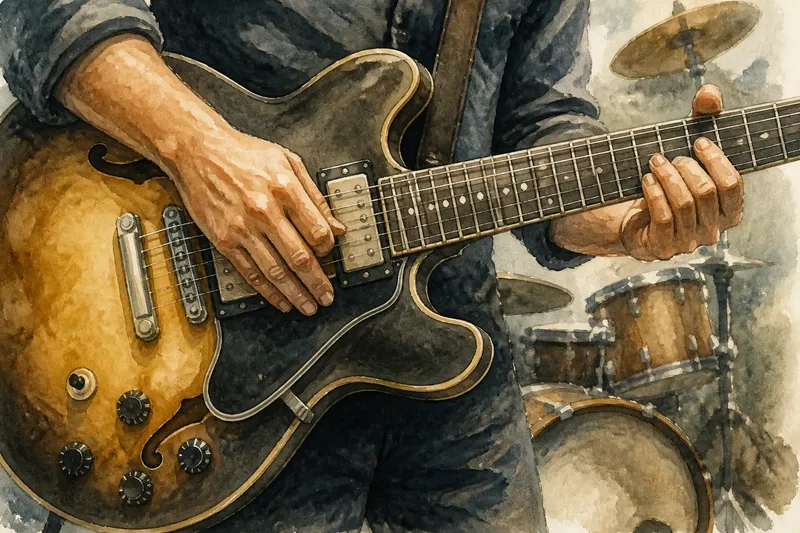
A guitarist mutes a chord with the heel of a hand, flicks two strings, then leaves a pocket of silence before the next hit. The band feels the gap as clearly as the sound. When the guitar became a rhythm section, this kind of timing turned the instrument from a carrier of melody or harmony into a maker of pulse.
That change did not require a new guitar. It came from treating the instrument’s attack, decay, and silence as rhythmic material. If a guitar part sounds busy but the groove still feels limp, the trouble is often not a lack of notes. It is a mismatch between what the hand plays and what the rhythm needs.
Pulse without constant strumming
A guitar chord can provide several jobs at once: pitch, harmonic color, and a sharp transient that marks time. But a steady run of equal strums can blur those jobs together. The ear stops hearing individual accents and starts hearing a wash.
Players found more rhythmic range by separating the chord’s components. A short, clipped stroke can act like a snare-side accent; a low-string hit can suggest a kick; a muted scrape can fill the space between them. The part may use fewer pitches than a chord progression, yet carry more rhythmic information.
Think of the guitar like a small hand fan: the motion matters as much as the air it moves. A stroke that stops abruptly has a different feel from one allowed to ring. The fretting hand can release pressure without leaving the strings, while the picking hand controls how hard and where each note begins.
When strumming crowds the groove
A common problem is that every subdivision gets filled. The guitar player hears an open space and supplies another stroke, but the added motion can compete with hi-hat, shaker, or piano. The cause is often an assumption that a rhythm part should keep moving continuously.
Try identifying the strongest pulse in the arrangement, then playing only the strokes that reinforce it. Keep the wrist moving if that helps internal timing, but let some motions pass without contacting the strings. This creates a difference between the hand’s motion and the audible part, opening room for other instruments.
Say you have an invented arrangement with bass on the downbeats and a tambourine marking the backbeat. If your guitar strums through every beat, try muting the chord and striking only the offbeat accents. The expected observable result is a clearer separation: the bass remains easy to follow, while the guitar adds lift rather than a second, competing pulse.
When chords sound too long
Another snag appears when the chord’s sustain smears the next accent. This is especially noticeable with open strings, bright acoustic guitars, or a part played near a cymbal-heavy drum pattern. The issue is not that ringing chords are wrong; it is that their decay may occupy space the arrangement needs.
Shorten selected notes by easing fretting pressure after the attack, touching unused strings lightly, or choosing smaller chord shapes. A partly muted chord can preserve the percussive click while reducing the harmonic tail. On electric guitar, the instrument’s volume and tone controls can also shape the impression, but timing and muting usually determine whether the rhythm reads cleanly.
Use contrast rather than muting everything. Let one chord ring at the end of a phrase, then keep the next few strokes compact. The longer sound becomes an event instead of a constant background, and the return to short attacks feels more deliberate.
When the riff loses its bounce
A riff can have the right notes and still feel stiff if every attack lands with the same weight. Rhythmic guitar often depends on small differences: a stronger downstroke, a lighter upstroke, a held note followed by a clipped one, or a rest that makes the next hit seem to lean forward.
Listen for the pattern of accents before changing the notes. Mark which attacks should lead and which should recede, then practice the phrase slowly enough to make those differences clear. A metronome can help expose rushing, but it does not decide the feel; the player still has to choose how the guitar sits against the beat.
If the riff is hard to play cleanly, simplify its texture before increasing speed. Remove an inner chord tone, use a partial chord, or shift a note to a neighboring string if that makes the accent easier to control. The goal is not technical display; it is a repeatable shape of strong and weak attacks.
When the guitar fights the drums
Sometimes the guitar has a convincing rhythm by itself but clashes with the kit. A dense strum may mask the snare’s snap, while a low, forceful guitar attack can muddy the bass drum. This usually happens because both parts are emphasizing the same moment with similar weight.
Compare the guitar’s accents with the drummer’s kick, snare, and cymbal pattern. Keep the guitar’s strongest stroke where it supports the arrangement, then reduce or omit strokes that duplicate a prominent drum hit without adding a new color. A guitar can answer the kit, reinforce it, or create a counter-rhythm; it need not do all three at once.
In a band rehearsal or a home recording, listen to the guitar at the level it occupies in the full mix, not only in solo. If its pulse disappears when the drums enter, try a sharper attack or a more distinctive rest pattern before reaching for extra volume. Rhythmic definition often comes from contrast, not loudness.
What should you listen for?
Does every stroke need a chord?
No. Muted strings, single-note fragments, and brief scratches can keep the time moving without adding a new harmony. Use them where their texture serves the groove, and leave space when another instrument already marks the subdivision.
Should the picking hand keep moving?
It can, but only the intended strokes need to touch the strings. Silent motion can steady the hand while preserving audible gaps, especially in patterns that alternate downstrokes and upstrokes.
How can you tell if the guitar is too busy?
Listen for whether the bass and drum accents remain easy to distinguish. If the guitar blurs their attacks or makes the groove feel more crowded without adding a useful response, remove strokes before adding effects or volume.
Is rhythmic guitar always percussive?
No. A sustained chord can anchor a section, and a melodic line can supply pulse through its phrasing. The defining choice is whether the guitar’s timing contributes to the feel, not whether every note is short or sharply attacked.
Make the attack count
The guitar’s rhythmic role expanded because players learned to shape not just which chord sounded, but how each sound arrived and disappeared. A clipped chord, a brushed string, or a deliberate rest can be as structural as a change in harmony.
When the guitar became a rhythm section, it did not stop being melodic or harmonic. It gained another responsibility: making the beat audible in its own way. For a guitar part that feels unfocused, start with the attacks and silences. A cleaner pattern of emphasis often reveals the groove already hiding in the notes.